Clay, sand and the same inch of water
Two gardens on the same street can need opposite watering schedules because of what lies under the mulch. Sand takes water fast and lets it go, clay takes it slowly and keeps it, and the timer has to follow the soil.
Published 4 min read
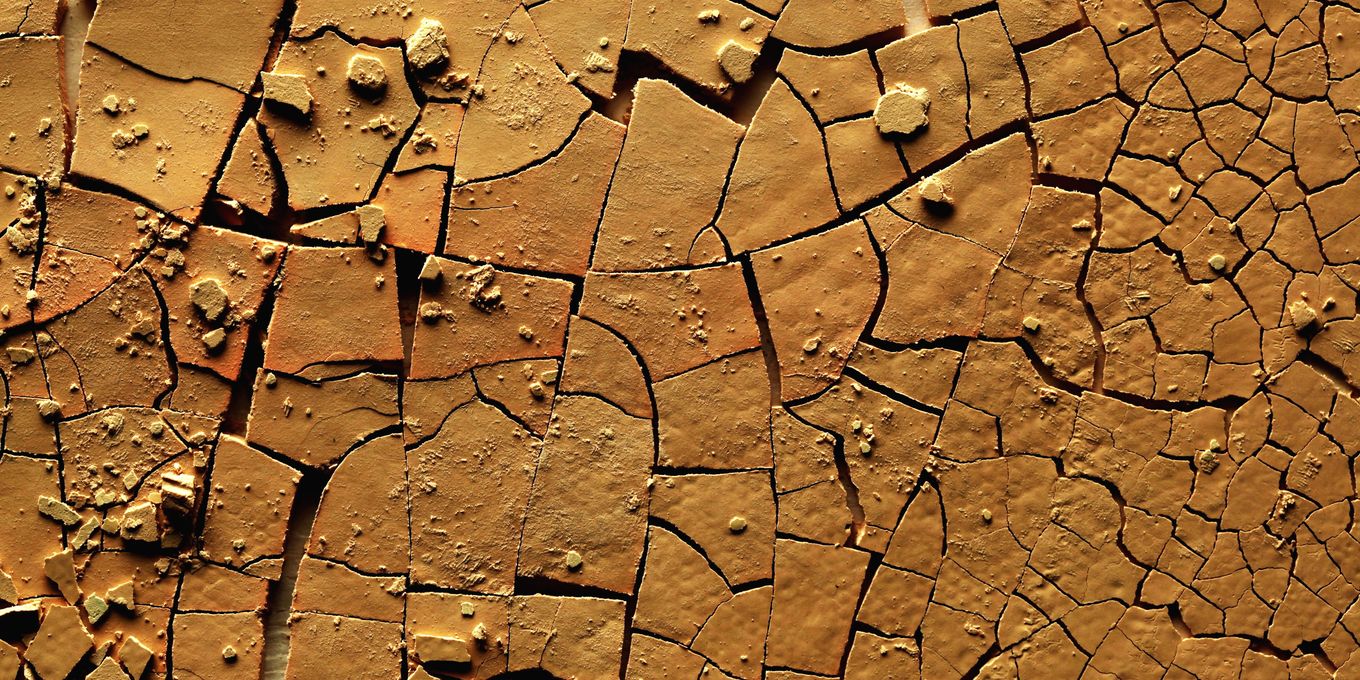
Put an inch of water on a sandy bed and on a clay bed and the two soon part ways. On the sand the water is gone from the surface almost at once and keeps moving down. On the clay it beads, pools in the low spots and, if the sprinkler keeps running, starts to run off toward the path. A day later the sand may already be dry a few inches down, while the clay is still damp.
The difference comes from the size of the particles. Sand grains are large and roughly round, with big, well-connected gaps between them. Clay particles are tiny and flat, packed together like a stack of cards, and the spaces between them are small and irregular. South Dakota State University Extension’s explainer on how soil holds water puts the result plainly: water moves quickly through sand and holds poorly there, and moves slowly through clay and is held much more tightly. Silt sits in between, and a loam is a mix of all three.
How fast it goes in
Soil scientists call the steady rate at which a soil takes in water its basic infiltration rate. The University of Nebraska’s irrigation course gives typical ranges: half an inch to three quarters of an inch an hour for fine sand, about a third to half an inch for sandy loam, a quarter to four tenths for silt loam, and only a tenth to a fifth of an inch an hour for clay. Compacted ground takes water in more slowly still.
A sprinkler that puts down half an inch an hour is already applying water more than twice as fast as a clay soil can accept it. Whatever the soil cannot take in runs off, carries soil and fertilizer with it, and never reaches the roots. On sand the same sprinkler is gentle enough.
How much stays within reach
The second number that matters is how much water each soil holds for plants after gravity has drained the rest away, its available water capacity. Oregon State University Extension’s guide to soil, plant and water relationships, published in April 2026, lists it in inches of water per foot of soil: 0.25 to 0.75 for coarse sand, 1.2 to 1.4 for sandy loam, 2.0 to 2.5 for silt loam and 1.2 to 1.5 for clay.
Clay holds more water than sand, then, but it is not the best soil for storage. Silt loams hold the most plant-available water, and part of the water clay contains is gripped so tightly that roots cannot pull it free. In a vegetable bed where most roots work in the top foot, a coarse sand may have less than an inch of usable water in reserve. A silt loam can hold two inches or more.
Two schedules
Those numbers turn into two different watering habits.
Clay: water less often, but in several short runs with a pause between them. Run the sprinkler or the drip line until water just begins to pool, stop until the surface water has soaked in, then run it again until the bed has had its full amount. Oregon State’s guide describes the same approach for fine-textured soils: a low application rate or multiple cycles, so the water sinks to the roots and not into the gutter. Once the soil is wet to depth it can go longer before the next watering, and a finger or a trowel pushed into the soil is a better guide than the calendar, because clay that is kept soggy starves roots of air.
Sand: water more often, with smaller amounts each time. A large dose on sand moves straight past the roots and takes dissolved nutrients down with it. Splitting the same weekly total into two or three lighter waterings keeps more of it where the plants can use it.
A weather-based timer follows the same logic once it is told the soil of each zone. Many such timers water when about half of the water the soil holds for plants has been used, so a sandy zone comes round again much sooner than a clay one.
Loam, the soil most garden books assume, is forgiving on both counts. Compost helps at either end, opening up clay and giving sand something to hold water with.
The jar test
A rough idea of texture needs no lab. A youth soil lesson from K-State Research and Extension in Pottawatomie County lays out the jar method. Dry a couple of cups of soil, pick out stones and roots and crush the lumps. Fill a tall, straight-sided jar a quarter full with the soil, add water until it is three quarters full and a teaspoon of powdered dishwasher detergent, then cap it and shake hard for ten to fifteen minutes.
Set the jar down where it will not be moved. Sand settles within a minute, so mark that layer. After two hours mark the top of the silt. The clay stays suspended much longer, and it can take one to three days, sometimes weeks, for the water to clear enough to mark it. The thickness of each band divided by the total gives the rough share of sand, silt and clay, and a soil texture triangle turns those shares into a name such as sandy loam or silty clay.
The result is only an estimate, and a lab soil test adds the chemistry. For watering, the jar answers the main question: whether the beds want water slowly in rounds, or a little more often.